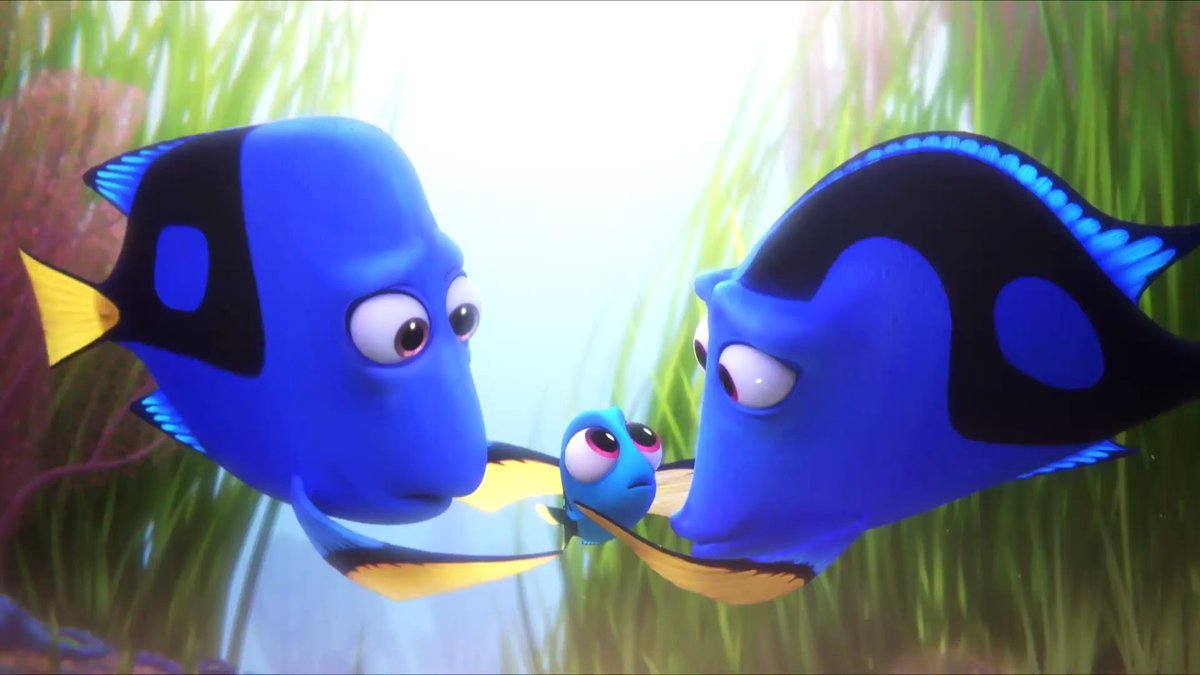
Picture this: a tiny, wide-eyed blue tang fish, her memory as fleeting as a whisper, yet her spirit bright as a freshly polished shell. This is the indelible image of Baby Dory, a character who didn't just steal scenes but burrowed deep into the hearts of millions, becoming an instant icon. Her story, particularly her touching origin and first appearance, is a tale woven into the very fabric of one of Pixar's most beloved sequels, Finding Dory. Far from being just a cute face, Baby Dory’s flashbacks provided the essential emotional core, giving context to Dory’s lifelong search for belonging and identity, and driving the entire narrative forward.
But before we dive into the deep blue sea of her cinematic debut, let's clarify a crucial point that often causes a ripple of confusion among fans and readers alike.
At a Glance: Baby Dory's True Origin
- Who is Baby Dory? The adorable, forgetful juvenile version of Dory from Pixar's Finding Dory.
- First Appearance: The animated feature film Finding Dory, released in 2016.
- Role in the Film: Featured exclusively in poignant flashbacks that reveal Dory's backstory and her struggle with short-term memory loss.
- Voice Actor: Sloane Murray, a then 7-year-old talent and daughter of producer Lindsey Collins.
- Impact: A "secret star" whose emotional scenes contributed significantly to the film's record-breaking success.
- Not to be Confused With: Dory Fantasmagory, a different, human character from a children's book series by Abby Hanlon.
Clarifying the Doryverse: Baby Dory (Fish) vs. Dory Fantasmagory (Girl)
It’s easy to get tangled in the vast ocean of media, especially when beloved characters share a name. One of the most common misconceptions about our little blue tang concerns her namesake, Dory Fantasmagory. Let's set the record straight: Baby Dory, the fish from the Pixar universe, and Dory Fantasmagory, the human girl from the picture-chapter books, are entirely separate and distinct characters.
Dory Fantasmagory first graced our world not on screen, but between the pages of a book. Written and illustrated by Abby Hanlon, the inaugural 'Dory Fantasmagory' book hit shelves in 2010, published by Candlewick Press. This print debut introduced readers to an exuberant, highly imaginative young girl. Dory Fantasmagory is known for transforming everyday moments into grand adventures, characterized by big feelings, dramatic proclamations, and a delightful blurring of the lines between what’s real and what’s pretend. Her books, designed in a picture-chapter style with short narratives and chunky illustrations, perfectly capture a child's perspective, inviting early readers aged 5-8 into longer stories. This debut established a tone of playful exaggeration, emotional honesty, and a perfect balance of mischief and heart for the series. Crucially, the ground truth confirms that Dory Fantasmagory "did not debut on TV, in a comic, or other media, but in print, setting the template for subsequent books."
Our subject, Baby Dory, on the other hand, belongs squarely to the cinematic world of Pixar. She is a marine marvel, a tiny, adorable fish whose journey unfolds within the digitally rendered depths of the Pacific Ocean. Their shared name is purely coincidental, highlighting the need for clarity in an age where character universes can sometimes overlap in unexpected ways. So, if you're looking for the origin story of the forgetful fish, you've come to the right place; if it’s the imaginative girl you seek, her adventures lie in a different, equally enchanting realm of literature.
The Big Screen Debut: Baby Dory's First Appearance in Finding Dory
The true origin story and first appearance of Baby Dory unfold entirely within the critically acclaimed Pixar sequel, Finding Dory. Released in 2016, this film captivated audiences and critics alike, earning a record-breaking $136.2 million on its opening weekend. While the adult Dory (voiced by the inimitable Ellen DeGeneres) takes center stage, it’s the series of flashbacks featuring her younger self that truly anchor the movie's emotional arc.
Baby Dory is not a separate character with her own spin-off series or prequel film. Instead, she is an integral, heartbreakingly cute component of Dory's own backstory. These flashbacks aren't merely decorative; they serve a profound narrative purpose, illustrating the very foundation of Dory's short-term memory loss and the loving, patient efforts of her parents to help her cope. Her innocent pronouncements of "I suffer from short-term memory loss" delivered with earnest charm, are both endearing and tragic, immediately connecting viewers to her struggle from a tender age.
The creative team behind Finding Dory, led by director Andrew Stanton, strategically used these glimpses into Dory's past to build empathy and understanding for her character. By showing her as a vulnerable, yet spirited, little fish learning to navigate a world that doesn't always cater to her unique challenges, the film establishes a powerful emotional tether to her adult quest. It’s in these moments that we first encounter Baby Dory, a character designed to evoke immediate affection and underscore the film's central themes of family, acceptance, and self-discovery. Her first appearance, therefore, is not a grand standalone event but a series of beautifully integrated narrative threads that explain how Dory became the lovable, persistent fish we know from Finding Nemo.
Meet Sloane Murray: The Voice Behind the Cuteness
A character’s voice can often be as iconic as their design, and for Baby Dory, the casting was nothing short of brilliant. The distinctive, high-pitched, and utterly adorable voice that brought Baby Dory to life belongs to Sloane Murray. At just 7 years old during the film's production, Murray delivered a performance that perfectly captured the innocence and charming vulnerability of the young blue tang.
What makes Sloane Murray's contribution even more heartwarming is her direct connection to the film's creative heart: she is the daughter of producer Lindsey Collins. This familial tie brought an authentic, unvarnished quality to Baby Dory's voice, lending an air of genuine childhood wonder and earnestness to her lines. It wasn't the polished performance of an adult voice actor mimicking a child, but the pure, natural sound of a child herself.
Director Andrew Stanton specifically highlighted Baby Dory, along with other elements, as one of the "secret stars" of Finding Dory. Murray's voice work was crucial to this designation. Her unselfconscious delivery of lines like "I forget things almost instantly" helped solidify Baby Dory's status as an undeniable scene-stealer, enchanting audiences with her cuteness and making her memory struggles all the more poignant. It's a testament to the power of authentic voice casting and the magic Pixar is known for creating, ensuring that Baby Dory’s impact resonated deeply with viewers of all ages.
A Technological Triumph: The World Baby Dory Inhabited
The sheer immersive quality of Finding Dory, particularly the realistic environments that Baby Dory navigates, owes a great deal to groundbreaking advancements in animation technology. Director Andrew Stanton noted that the sequel showcased several unheralded technological leaps compared to its predecessor, 2003's Finding Nemo. These improvements weren't just cosmetic; they were fundamental to creating a believable and emotionally resonant world for Dory's backstory.
One of the most significant advancements was the realistic rendering of water. In Finding Nemo, achieving nuanced water effects was either impossible or too costly. By 2016, however, Pixar's technology allowed for an unprecedented level of detail, including:
- Surface Movement: The subtle undulations of the ocean surface, reflecting the ebb and flow of currents.
- Light Ripples: The mesmerizing play of light on and through the water, creating dynamic and ever-changing patterns.
- Reflections: Accurate and believable reflections of characters and environments on the water's surface, adding depth and realism to every scene.
These technical achievements meant that Baby Dory's underwater world felt incredibly tangible, from the sun-dappled shallows where she learned to navigate with her parents to the vast, open ocean that would later challenge her memory. The improved water rendering elevated the visual storytelling, making her childhood memories feel vivid and almost photographic for the audience.
Beyond the water itself, the film also boasted the creation of fluid, realistic sea kelp. What might seem like a minor detail was, in fact, a complex animation feat. Each leaf and stalk of kelp was animated to move differently, responding dynamically to the underwater currents. This wasn't just visual flair; it served as a powerful narrative metaphor for a fairy-tale forest. For a tiny fish like Baby Dory, navigating through swaying kelp beds could feel both wondrous and daunting, transforming her environment into a living, breathing character in her own right. These advancements ensured that every frame featuring Baby Dory was not just beautiful but also contributed to the emotional weight and authenticity of her story, making her journey of discovery all the more compelling.
The Emotional Resonance of Baby Dory's Flashbacks
While the adult Dory's present-day quest for her parents forms the backbone of Finding Dory, it's the carefully interspersed flashbacks of Baby Dory that provide the profound emotional weight, transforming a simple search into a deeply moving exploration of memory, family, and perseverance. These scenes are more than just plot devices; they are narrative anchor points that build immense empathy for Dory’s lifelong struggle.
Audiences were instantly captivated by Baby Dory's undeniable cuteness, which, as director Andrew Stanton noted, made her one of the film's "unheralded stars." But her appeal went far beyond aesthetics. Her innocence, combined with the heartbreaking reality of her short-term memory loss, created a potent emotional cocktail. Seeing her parents patiently guide her, teaching her little songs and phrases to help her remember them, underscores the immense love and challenges that shaped her. These moments explain why Dory is so fiercely independent yet deeply yearns for connection – a direct result of her early experiences.
The emotional resonance of these flashbacks contributed significantly to the film's monumental success. Finding Dory's record-breaking $136.2 million opening weekend wasn't solely due to the established popularity of the Finding Nemo universe; it was also a testament to the film's ability to tug at heartstrings, largely through Baby Dory's narrative. Her scenes illustrate the profound impact of parental love and the inherent resilience of a child facing unique obstacles. They are a poignant reminder that even when memory fades, the essence of love and belonging can remain, driving us forward. By witnessing her origin, audiences understood Dory's motivations on a much deeper level, cheering for her not just as a funny sidekick, but as a fully realized character on a deeply personal journey. To Learn all about Baby Dory, including her design evolution and character impact, further explores how this small fish made such a big splash.
Beyond Baby Dory: Other Unsung Heroes of Finding Dory
While Baby Dory undoubtedly captured hearts, Finding Dory was rich with new characters and details that contributed to its overall success and charm. Director Andrew Stanton made a point of highlighting several "unheralded stars" and technological marvels that made the film a standout. These elements, alongside Baby Dory's flashbacks, showcased Pixar's commitment to storytelling innovation and character development.
One such scene-stealer was Gerald the Sea Lion. Created by co-writer Bob Peterson, Gerald quickly became a fan favorite thanks to his distinctly crazed expression and hilariously goofy swim. He embodies what Stanton described as a "playground pecking order" – initially seemingly an outcast, perpetually trying (and failing) to join the other, more dominant sea lions on their sun-drenched rock. Yet, in true Pixar fashion, Gerald ultimately triumphs, his perseverance and unique personality winning over audiences. His inclusion provided comedic relief and a touching side story about belonging, mirroring Dory's own search for acceptance.
The broader canvas of Finding Dory also benefited from other subtle yet significant improvements. The advancements in rendering water and kelp, as previously discussed, weren't just for Baby Dory’s scenes. They enriched the entire film, making every underwater environment feel more alive and detailed than ever before. This attention to technological detail allowed the animators to create a believable, vibrant world for all characters, whether they were the main protagonists or the delightful background players. These combined efforts, from the poignant flashbacks of Baby Dory to the comedic genius of Gerald, demonstrate how a multitude of "secret stars" contribute to a film's lasting impact and critical acclaim.
Common Questions & Misconceptions About Baby Dory
Given her immense popularity and the similar naming conventions in different media, it’s no surprise that questions often arise about Baby Dory’s background. Here, we address some of the most common inquiries to clear up any lingering confusion.
Q1: Is Baby Dory from a book or a TV show?
A: No, Baby Dory's origin is exclusively cinematic. She first appeared in the Pixar animated film Finding Dory (2016). The confusion often stems from the existence of a separate, human character named Dory Fantasmagory, who debuted in a picture-chapter book series by Abby Hanlon in 2010. These two characters are entirely distinct. Baby Dory the fish never appeared in a book, comic, or TV series before her movie debut.
Q2: Who is the voice actor for Baby Dory?
A: Baby Dory is voiced by Sloane Murray, who was 7 years old at the time of the film's production. She is the daughter of producer Lindsey Collins. Her authentic child's voice contributed significantly to the character's charm and cuteness, making her scenes incredibly endearing to audiences.
Q3: When did Baby Dory first appear?
A: Baby Dory first appeared on the big screen with the release of Finding Dory in 2016. Her appearances are in a series of flashbacks throughout the film, which detail Dory's early life and the origins of her short-term memory loss.
Q4: Is Baby Dory’s story a standalone film?
A: No, Baby Dory’s "story" is not a standalone film or a separate prequel. Her brief but impactful appearances are interwoven into the main narrative of Finding Dory, serving as essential backstory to explain the adult Dory’s personality, challenges, and motivations for finding her parents.
Q5: How did Baby Dory contribute to the film’s success?
A: Baby Dory's flashbacks provided the crucial emotional core of Finding Dory. Her cuteness and the poignant depiction of her early struggles with memory loss helped audiences deeply empathize with Dory. This emotional connection was a significant factor in the film's record-breaking opening weekend and overall critical and commercial success, making her one of the film's "secret stars" as highlighted by director Andrew Stanton.
Looking Back and Moving Forward: Baby Dory's Enduring Legacy
Baby Dory, though a minor character in terms of screen time, carved out an immeasurable space in the hearts of those who watched Finding Dory. Her origin story isn't one of a grand debut in a dedicated film, but rather a masterclass in how carefully crafted flashbacks can enrich a character, deepen a narrative, and provide profound emotional resonance. She wasn't merely a cute addition; she was the essential explanation, the vulnerable past that illuminated Dory's resilient present.
From the authentic voice of 7-year-old Sloane Murray to the technological marvels that brought her watery world to life, every element surrounding Baby Dory’s first appearance was meticulously designed for impact. Her story, intertwined with advancements in animation that allowed for hyper-realistic water and kelp, demonstrated how technical innovation can directly serve emotional storytelling.
Baby Dory's legacy lies in her ability to transcend her brief appearances. She embodies the universal themes of childhood vulnerability, the enduring power of family love, and the quiet courage of facing life's challenges. Her early struggles with short-term memory loss, depicted with such tender care, made the adult Dory’s journey all the more meaningful and inspiring. She remains a vivid reminder that sometimes, the smallest characters leave the biggest impressions, reminding us all to keep swimming, no matter how much we forget along the way.