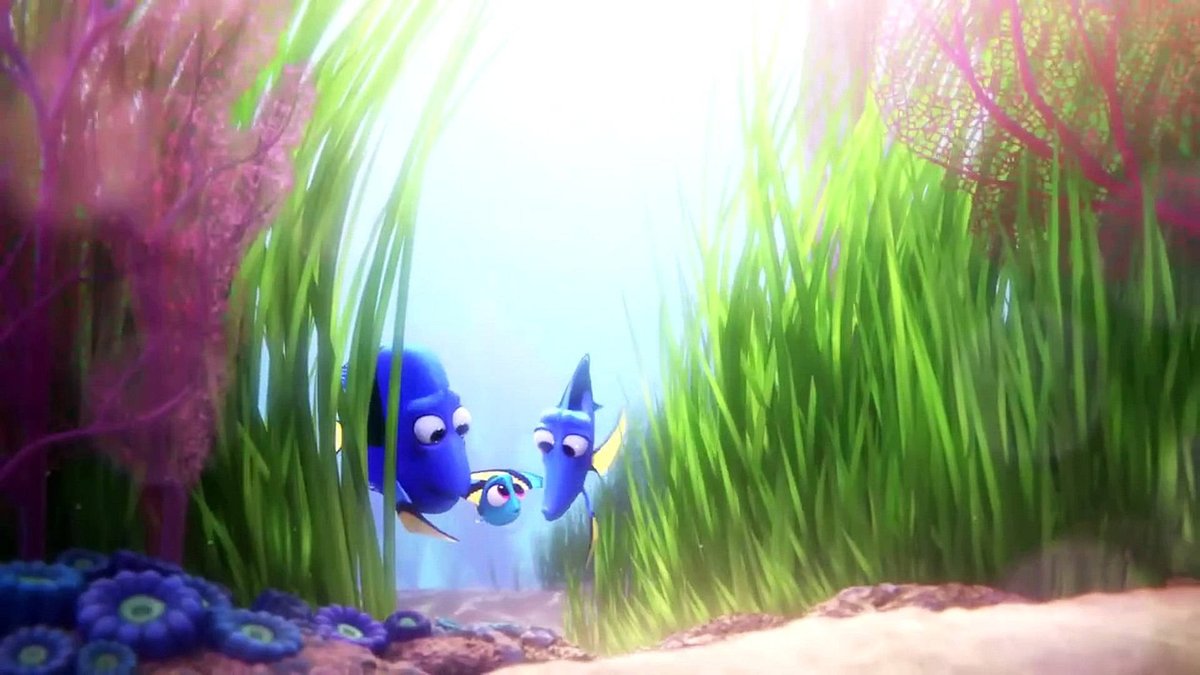
From the moment Baby Dory swims onto the screen in Pixar's Finding Dory, she doesn't just capture our hearts; she fundamentally reshapes the film's emotional landscape. Her potent blend of unbearable cuteness and profound vulnerability isn't merely a design choice; it's a meticulously crafted narrative device that allows the movie to explore complex themes of loss, abandonment, and self-acceptance with unparalleled depth and resonance. This little blue tang isn't just adorable; she's the emotional linchpin, driving both the audience's connection and the narrative's courageous journey into Dory's past.
At a Glance: Why Baby Dory Matters So Much
- Emotional Catalyst: Baby Dory's design and voice were intentionally crafted to evoke maximum empathy, preparing audiences for Dory's lifelong journey with memory loss.
- Cuteness with a Purpose: Her irresistible charm leverages our innate psychological response to juvenile features, making her vulnerability even more impactful.
- Narrative Anchor: She grounds the film's exploration of trauma, allowing filmmakers to depict difficult memories gradually without overwhelming viewers.
- Symbol of Self-Acceptance: Her innocent struggles underscore the movie's core message: embracing one's unique qualities, even perceived flaws, as strengths.
- Pixar's Masterclass: Baby Dory exemplifies how animation can blend visual appeal with deep emotional intelligence to tell universally resonant stories.
The Irresistible Charm: Deconstructing Baby Dory's Appeal
When Pixar sets out to design a character, it's never just about aesthetics; it's about engineering a connection. Baby Dory, brought to life by designer Jason Deamer, is the epitome of this philosophy. Her oversized eyes, tiny fins, and endearing "just keep swimming" mantra create a character so utterly captivating that, as Deamer himself noted, she's "cute until it hurts." But what makes her so uniquely effective at hijacking our attention and emotions?
It’s not just artistic genius at play; it's rooted in fundamental human psychology. Our brains are hardwired to respond to cuteness. Babies, across all species, exhibit a set of aesthetic qualities – big eyes, chubby cheeks, button noses, soft skin – that act as powerful attractive forces, ensuring they receive the constant attention and care crucial for their survival. Neuroimaging studies reveal that merely seeing a baby face can activate the orbitofrontal cortex, an area involved in emotions and pleasure, within a rapid 140 milliseconds. This isn't just a fleeting feeling; it triggers sustained brain processing in networks associated with emotion, pleasure, and social interactions, essentially overriding other demands for our attention.
For Baby Dory, these features are amplified. Her wide, innocent eyes convey vulnerability and curiosity, instantly drawing us in. The slight awkwardness of her movements, combined with her often-confused expressions due to her short-term memory loss, compounds this cuteness. This intentional design isn't just for show; it's a powerful tool that transforms a cartoon character into a potent emotional trigger, paving the way for audiences to deeply invest in her journey.
Cuteness as a Catalyst: Building Empathy for Dory's Past
Baby Dory's immediate charm serves a profound narrative purpose: it primes the audience for empathy. By making her so irresistibly adorable, the filmmakers ensure that viewers are instantly protective and emotionally invested in her well-being. This intense connection becomes crucial when the film delves into the more poignant and challenging aspects of Dory's childhood trauma – themes of loss, abandonment, and the struggles associated with her short-term memory loss.
Director Andrew Stanton and producer Lindsey Collins expertly navigated the delicate task of depicting childhood trauma. Instead of confronting audiences with the full tragedy upfront, they chose to gradually reveal Dory's memories. This measured approach allowed viewers to connect with her loving parents, Jenny and Charlie, and to understand the context of Baby Dory's struggles without being overwhelmed by initial shock. The deep emotional bond forged through Baby Dory's cuteness enables the audience to engage with these difficult scenes openly, fueled by a desire to see this lovable character overcome her challenges.
Furthermore, the knowledge that adult Dory is, in her own unique way, "OK," grants the filmmakers significant creative license. This assurance allows them to portray her past struggles more bravely, knowing that the audience can bear witness to the hardship because they see the eventual resilience. Baby Dory's vulnerability, amplified by her cuteness, thus becomes a bridge, allowing us to journey through her painful memories and truly understand the roots of her adult personality and enduring optimism. To delve deeper into the character's journey and impact, you might find more comprehensive information in our guide All about Baby Dory.
Navigating Trauma: Pixar's Sensitive Storytelling Approach
Finding Dory isn't afraid to confront heavy subjects, but it does so with immense sensitivity, largely thanks to Baby Dory's role in the narrative. The film explores the profound isolation Dory experienced as a young fish with a debilitating memory condition. It touches upon the fear of being lost, the pain of forgetting loved ones, and the overwhelming feeling of being different. Baby Dory's struggles in remembering her parents and her home are heartbreaking, yet her innocence and persistent, albeit flawed, attempts to cope make these moments relatable rather than depressing.
The filmmakers' decision to reveal Dory's fragmented memories in snippets, rather than a single, shocking flashback, is a masterstroke. Each fleeting glimpse of Baby Dory trying to recall a detail, or being lovingly guided by her parents, builds the emotional foundation of her character. We see her parents' unwavering patience and the simple, yet profound, ways they try to equip her for life with memory loss. This careful pacing allows the audience to gradually piece together the picture of Dory's past, fostering a deep appreciation for her resilience and the strength she inherited.
Baby Dory’s experiences highlight the central conflict: how a perceived flaw can shape one's identity. Her memory loss isn't just a plot device; it's an intrinsic part of who she is, and the film beautifully illustrates the journey of accepting and even celebrating this uniqueness. It’s a powerful testament to how Pixar uses character design and narrative structure to explore complex psychological themes in a way that is accessible and deeply moving for all ages.
The Power of Self-Acceptance: Dory's Unique Identity
At its heart, Finding Dory carries a universal and profoundly hopeful message, articulated by Andrew Stanton: peace comes from self-acceptance and discovering one's true identity. For Dory, this meant learning to embrace her short-term memory loss not as a flaw to be overcome, but as a unique and special trait that defines her. This isn't about "fixing" Dory; it's about her learning to live authentically with her inherent qualities, free from embarrassment or self-doubt.
Baby Dory's early interactions and experiences are critical in establishing this theme. We see her parents, particularly, reinforcing positive self-talk and practical coping mechanisms ("just keep swimming," "what would Dory do?"). These are the very lessons that adult Dory carries with her, even when she can't remember how she learned them. Her childhood struggles, seen through the lens of her adorable vulnerability, make her journey toward self-acceptance even more poignant. The film masterfully demonstrates that our perceived weaknesses can, in fact, be sources of incredible strength and uniqueness.
This message resonates deeply because it taps into a fundamental human desire: to be understood and accepted for who we are. Baby Dory's innocence and her earnest attempts to navigate a world that doesn't quite accommodate her memory challenges make her a powerful symbol of anyone who has ever felt different or struggled with self-worth. Her story becomes an encouragement to embrace what makes us unique, showing that true belonging comes not from changing ourselves, but from finding our place where we are celebrated for our authentic selves.
Beyond the Screen: The Real-World Resonance of Cuteness and Empathy
The phenomenon of cuteness, so expertly harnessed in Baby Dory's character, extends far beyond the realm of animated films. As scientific research highlights, cuteness is a powerful driver of human behavior, triggering not just direct caregiving instincts but also broader empathy and compassion. This expanded moral concern can influence behaviors ranging from charitable donations to our overall willingness to help others.
Understanding how humans interpret "baby signals" – whether from an animated fish or a human infant – is vital for addressing real-world developmental challenges. For instance, parental depression affects a significant percentage of parents globally, impacting their ability to respond to their infants' cues. Similarly, conditions like cleft lip, affecting one in 700 live births, can alter an infant's appearance, potentially influencing the immediate "cuteness response" that naturally fosters bonding. By comprehending the intricate ways in which cuteness impacts our brains and drives nurturing behaviors, we can develop better interventions and support systems for families facing these difficulties.
Baby Dory, in her small animated form, inadvertently helps us grasp the profound, almost primal, power of cuteness as a mechanism for connection and survival. She's a fictional character, yet her impact mirrors the real-world functions of cuteness: to draw us in, evoke care, and foster a deeper understanding of vulnerability and the need for compassion.
Common Questions About Baby Dory's Impact
Was Baby Dory designed just to be cute, or for a deeper purpose?
While undeniably cute, Baby Dory's design was meticulously crafted for a much deeper purpose than mere aesthetic appeal. Her overwhelming cuteness serves as a critical narrative tool, designed to evoke immediate empathy and establish a profound emotional connection with the audience. This connection allows the filmmakers to explore complex themes of trauma, loss, and self-acceptance through her character without alienating viewers, preparing them to deeply invest in Dory's lifelong journey.
Is Finding Dory too sad or complex for young children because of Dory's trauma?
Finding Dory does delve into themes of abandonment and memory loss, which can be complex. However, the story is balanced with humor, adventure, and an ultimately hopeful message. The depiction of Dory's childhood trauma is handled with great sensitivity, revealed gradually and cushioned by the knowledge that adult Dory is resilient and "ok." Moreover, the film's core message of self-acceptance and finding one's family (both biological and chosen) is incredibly positive and understandable for children, making it a valuable teaching tool about empathy and celebrating differences.
How does Dory's memory loss, as seen in her childhood, ultimately become a strength?
Baby Dory's struggles with short-term memory loss are initially portrayed as a significant challenge and source of vulnerability. However, the film gradually reframes this perceived flaw. Her parents teach her coping mechanisms and positive affirmations, which foster her adaptability and unique way of navigating the world. As an adult, Dory's inability to dwell on the past often leads her to approach problems with an open mind and relentless optimism ("just keep swimming"). Her memory loss forces her to rely on instinct, kindness, and the help of others, ultimately forging deep, unconditional bonds and teaching her to embrace her unique identity as a strength rather than a weakness.
The Lasting Echo of a Little Blue Tang
Baby Dory is far more than an adorable side character; she is the vibrant, beating heart of Finding Dory. Her carefully engineered cuteness doesn't just entertain; it's a sophisticated psychological device that enables Pixar to navigate profound emotional landscapes, turning what could have been a difficult narrative into an accessible and deeply moving experience. Through her innocent eyes and unforgettable struggles, she embodies the film's powerful message of self-acceptance, illustrating that our unique traits, even those we perceive as flaws, are often what make us truly special and capable of extraordinary connection.
Her enduring appeal is a testament to Pixar’s mastery of storytelling – a blend of visual artistry, psychological insight, and unwavering emotional intelligence. Baby Dory reminds us that even the smallest characters can carry the heaviest emotional weight, shaping our understanding of empathy, resilience, and the profound journey of finding where we truly belong. She leaves us not just with a smile, but with a deeper appreciation for the intricate design behind beloved characters and the universal power of heartfelt animated storytelling.